Why Professionals Can’t Focus in the AI Era (And What To Do About It)

The average time a person focuses on a single screen task has dropped from 150 seconds (2.5 minutes) in 2004 to approximately 47 seconds as of 2023.
That’s not a fun productivity stat. That’s a crisis.
For professionals trying to stay relevant in the AI era, concentration isn’t a nice-to-have skill. It’s the foundation everything else sits on. AI can process information instantly, execute tasks at speed, and never gets distracted. The one thing it cannot do is think deeply on your behalf.
If you’ve lost the ability to focus for sustained periods, you’ve lost your primary competitive advantage over the machine. And most professionals have lost it without realising it.

I remember a time when I used to go to bed at 9pm, just to read books. 1am would come, i’d be like, just one more chapter. 2am would come, and i’m like do we have time for just one more?! Literally, hours and hours of reading, with no breaks.
This was BEFORE the smart phone era. The phones we had back then, best thing you had was the snake game.
The real issue, however, I realised recently that I struggled to focus on a few pages. This had to change.
You Don’t Have a Time Problem. You Have an Attention Problem.
Most professionals think they’re too busy to focus. They’re not. They’re fragmented.
There’s a difference. Busy means you have too much to do. Fragmented means your attention is being pulled in so many directions simultaneously that you’re never fully present in any single task.
You’re half-reading the email while half-listening to the call while half-thinking about the thing you forgot to do yesterday.
Fragmented attention produces shallow thinking. Shallow thinking produces average work. And in the AI era, average work is the first thing to get replaced, because AI produces average work faster, cheaper, and without needing a salary.
The professionals who will thrive are the ones who can sit down for 90 minutes and think deeply about a hard problem.
Formulate strategy. Make nuanced judgements. Connect dots that an algorithm can’t connect. That requires sustained, protected focus. And it’s becoming rarer.
Which means it’s becoming more valuable.
Most people fail at focus because they haven’t treated it as a career-critical skill.
Identifying Personal Roadblocks to Focus
Everyone’s got their own set of hurdles that mess with staying focused. It might be about constant noise in your workspace or even your smartphone’s constant buzzing. Identifying these roadblocks is the first step in knocking them down.
Personally, my phone has been on silent even before the smartphone; except that one period where ring-tones were a thing and my Nokia had the Still-DRE theme haha.

But before we get into that, we need to look at physical barriers like lack of sleep, poor diet, and even stress, which can play havoc with your concentration.
You might not realise how much these factors slow you down until you start addressing them. It’s not just about powering through with coffee and optimism, it’s recognising your body needs sleep and proper nutrition to support your mind.
I got into the bad habit of sleeping late, eating junk food. You’re effectively clogging up your own system. If you don’t fix the clog, nothing else matters.
Mental Roadblocks
Mental roadblocks are another biggie. Feeling overwhelmed with a long to-do list or battling anxiety can pull your brain in a thousand directions. There’s a whole heap of posts on battling anxiety in the Library section of this site for you to check out.
When your mind’s overthinking, concentrating on a single task becomes almost impossible.
Figuring out what’s disrupting your focus can be a real game-changer.
Simple self-assessment tools or just a bit of introspection can help you pinpoint what’s getting in your way. I’m always BIG on the self-reflection exercises; that’s why they always feature heavily as a starting point for anything Minotaur Mastery related.
Once you know what you’re up against, it becomes a whole lot easier to find practical solutions. Implementing some small but effective changes can have a big impact on your concentration levels.
What Actually Works (Not What They Tell You)
Most focus advice is aimed at people doing shallow tasks. Pomodoro technique, 25-minute sprints, frequent breaks. Fine if you’re data-entering. Useless if you’re trying to think strategically.
Ever tried the Pomodoro Technique? It’s a time management method that breaks work into intervals, usually 25 minutes long, separated by short breaks. Personally, I found this did NOT work for me.
Putting my phone away, adding a 90 minute block into my calendar for deep focus did. BUT only if I defined what I would work on specifically in that block. (Like write this article)
That’s the key most people miss. It’s not just about blocking the time. It’s about entering that block with a single defined intention.
Not ‘work on the project.’ But ‘write the first section of the client proposal.’ Specificity is what makes the block work.
Spiritual Work
Mindfulness can be a real game-changer when it comes to improving concentration. By practicing meditation or even just a few deep breathing exercises, you’re training your brain to stay present and aware.
This kind of mental workout strengthens your ability to focus on the task in front of you while ignoring those pesky distractions.
As a Muslim, the 5 daily prayers are important. But I found it difficult to concentrate for those. Sitting in silence, or breathing exercises, or even focus music on YouTube have helped.
Technology isn’t just a distraction; it can also be a great ally in helping you concentrate.
There are apps designed to limit your phone usage or to provide calming sounds and remind you to take breaks. Use these tools to create a balance rather than a hindrance in your daily routine. I check my screen time app regularly; it acts like a slap in the face when I see how much screen-time I’ve had haha.
Most people fail here because they keep copying systems that weren’t built for them. This was a huge issue for me, as I kept trying to use techniques from other people; which just never worked, like the Pomodoro one mentioned above.
Everyone’s brain works differently, so mix and match methods until you find your personal recipe for success. Stick with it, and you’ll see real improvements over time.
Environmental Architecture (Not Just ‘Clean Your Desk’)
Your environment is either working for your focus or against it. Most people treat this as an afterthought. It isn’t.
Your workspace plays a huge role in how well you can concentrate. Cluttered environments can clutter your mind too, making it hard to focus.
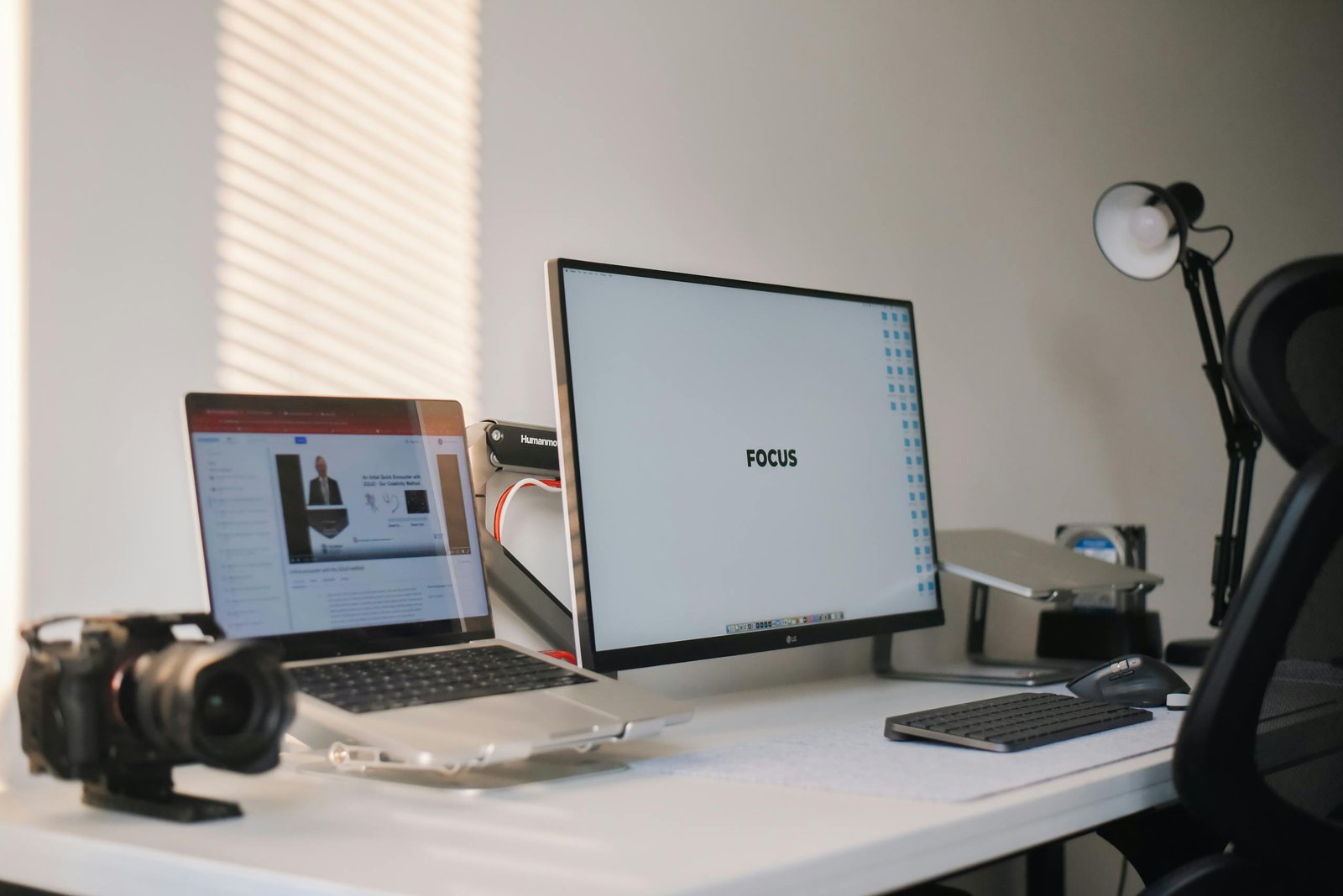
Keeping your desk clean and organised helps your brain follow suit. I regularly make sure there’s hardly anything on my desk. When it does get messy, you instantly feel it once you clean up.
Lighting and sound might seem like small things too, but they pack a punch when it comes to concentration.
Natural light is your best friend, so try to get as much of it as possible. If that’s not an option, soft, warm lighting can work wonders. My guy Zaid Dahaj gave a masterclass on light, and the circadian rhythm in general in our podcast – I highly recommend you check it out.
Sound matters too. Some peeps thrive in complete silence, while others need a bit of background noise. I find myself listening to these lo-fi tracks on YouTube. I think they’re AI generated, but there’s a mix of religious, spiritual and just soundtracks like the Last Samurai.
What’s Best For You
Figure out what works for you. Maybe it’s a playlist of calming tunes, or perhaps white noise helps shut out unwanted sounds.
Another great tip is to craft a routine that suits your peak concentration times. Everybody has their optimal performance hours; some peeps are morning people, others not so much. Schedule your most demanding tasks when you’re most alert.
This has changed for me, but it does depend on my mood too. Typically, i’m a slot starter in the morning, and then peak. I try to avoid working at night; but when you have children, sometimes it’s the best time to work.
Tailoring your environment to support your focus can take some trial and error, but it’s worth the effort. Small adjustments to your space and routine can massively enhance your ability to concentrate and get things done.
Sustaining Long-term Focus Requires Habit and Practice
Building habits that support concentration isn’t something you do overnight. It’s more of a step-by-step journey.
Start with small changes like setting specific times for focused work and gradually incorporate more complex routines as you get comfortable. I tried waking up hours earlier than my normal time. Didn’t work. 15 minutes earlier did. Then the next 15 minutes.
Breaks aren’t just an excuse to slack off; they’re vital for maintaining long-term focus. I’ve been working from home for years now, and never really took breaks. It caught up with me.
Regular, short relaxation intervals help recharge your brain. Stretch a bit, grab a snack, or just breathe away from that screen for a few minutes, and you’ll find yourself ready to dive back in with renewed energy.
Continuous learning plays a big role in keeping your brain sharp and your focus keen. Pick up new skills or hobbies that challenge your mind.
It keeps things exciting and prevents your concentration from stagnating.
The Minotaur of Stagnation
The whole Minotaur Mission is to go to war against yourself and this society fighting to keep you weak, stagnant and sedated.
So you do have an up-hill battle. Many of us slip into periods of stagnation, especially from corporate professional backgrounds. In the AI-age we’re now in, you need to break those shackles, they will be the biggest reason you fall behind.
Ultimately, sustaining concentration over time is all about balance: balancing work with rest, focus with relaxation, and new challenges with old routines.
I hate the word balance, because it’s overused. There really isn’t any such thing as balance; it’s more a misligned life – but that’s a topic for another day.
Focus Is the Competitive Edge You’re Not Using
Here’s the thing about the five skills that matter most in the AI era:
- Expertise in your field/craft
- Proficiency In AI
- Problem-solving
- Communication
- Visibility
None of them can be built in 47-second bursts.
- You cannot develop deep expertise while context-switching every minute.
- You cannot learn AI tools properly while half-distracted.
- You cannot solve complex problems without sustained thinking time.
- You cannot communicate with authority if your thinking is shallow.
- You cannot build visibility if you cannot produce work worth being visible for.
Focus is not a productivity hack. It’s the prerequisite to everything else.
AI has infinite concentration. It never gets distracted. It never loses the thread. If you’re competing on speed and volume, you’ve already lost.
The only game worth playing is depth; and depth requires exactly the kind of sustained, protected focus that most professionals have quietly surrendered to their phones.
Get it back. Guard it. Treat it like the career asset it is.
Because the professionals who can still think deeply, like really deeply, for extended periods, on hard problems, are going to be the ones the next decade rewards.