Why Every Professional Needs a Business Plan in the AI Era

For most of your career, you were trained to think like an employee. Follow the structure. Do your job. Climb the ladder. That model is breaking down. And so a business plan is no longer just for entrepreneurs; it’s becoming a survival tool for professionals.
In the AI era, every professional is being forced to think like a business. Not necessarily to start a company, but to understand:
- what value they create
- who they create it for
- how that value is delivered
- and how it can be scaled, replaced, or enhanced by AI
The issue is most professionals have never written a business plan. They didn’t need to. Someone else handled the strategy. Someone else secured the funding. Someone else decided what the company was trying to do and why.

You just got given your role, scope and KPIs; you didn’t need to worry about anything else.
That changes the moment you go independent.
The New World
Whether you’re building a consultancy, a one-person business, a freelance practice, or something you haven’t named yet; you are now the person who has to answer the questions that used to be someone else’s job.
And the number one mistake people make when they make this transition is skipping the plan entirely, because it feels bureaucratic, because they’re in a rush, because they don’t think their thing is “big enough” to need one; or it’s just not important.
It is. And it’s never been easier to create one. AI can do most of the heavy lifting in an afternoon.
The reason I’m writing about this is because most of you will now choose to become a one-person professional business. These were on the rise anyway; but will be so even more now. Why?
AI has made this not only possible, but inevitable for a growing number of professionals.
What A Business Plan Actually Is
A business plan is like your business’s roadmap, guiding every step of your journey. It’s also one of the most boring parts of business, and life in general. But for the modern professional, a business plan isn’t just crucial for your career success; it’s crucial for the design of the life you want to live.
It’s the blueprint for entrepreneurs to spell out their vision.
You know when you’re on a long journey and you need to get to a specific destination at a specific time, and the sat-nav starts to fumble isn’t fun, right?
Well, that’s exactly what starting a business without a plan feels like. Your moving somewhere, not necessarily forward or towards where you want to be. I hate talking about, because it’s not fun…but I do because it’s crucial.
What Goes Inside
Every strong business plan packs certain essential ingredients.
First up is the executive summary, which is like your elevator pitch, making people curious about what’s coming next. You always write this LAST.
You also need a solid company description; this is where you shine and show what makes you unique.
Market analysis plays a critical role. This bit helps you understand the world around you, who are your competitors, and what are the trends? Getting a grip on these details can give you a real edge. Especially when most people don’t do any research.
Research isn’t what you assume in your head. It’s based on actual market data. With AI, this has become a breeze.
The plan doesn’t stop there. You’ve got to nail down your organisation and management structure. It clarifies roles and responsibilities, making sure everyone knows where they fit in the grand scheme of things. If you’re a one-person business, or small enterprise – this is very easy.
Finally, when it comes to money matters, you outline how much you need, why it’s needed, and how it’s going to fuel your business expansion. That is if you’re looking for investment, which I would advise against.
Regardless, it’s still good to have a financial forecast and put together a budget for your own sake.
In essence, a well-crafted plan offers clarity, sets your focus, and preps you to make informed decisions. Having this detailed ahead of time saves you a whole lot of guesswork and helps you steer clear of pitfalls as your venture unfolds.
Why The AI Era Makes This Non-Negotiable
The post-career era is producing a wave of professionals going independent for the first time. Not because they planned to but because the structure they relied on is contracting. Firms cutting headcount. Corporates automating middle management. Consulting practices thinning their permanent workforce.
These are people with fifteen years of expertise, strong professional networks, and absolutely no experience of running themselves as a business.
A business plan isn’t just a document you write for investors. It’s a document you write for yourself. It forces you to answer three questions that most newly independent professionals avoid:
- Who exactly is my customer?
- What problem am I actually solving?
- How does money come in and keep coming in?
Without those answers, you’re skilled but directionless. And skilled but directionless in the AI era is a very exposed position to be in.
Research and Market Analysis Is The Bedrock of Your Plan
Hitting the ground running with solid research and market analysis can make all the difference for your business plan.
You need to know your audience like the back of your hand. Picture them: their needs, preferences, and even their pain points.

Why should they choose you over the competition? Answering this can provide a goldmine of insights. It’s staggering how little people do this. KNOW YOUR TARGET CUSTOMER LIKE YOU KNOW YOURSELF.
Tackling your market research head-on is crucial. Start with diving into the latest trends in your industry.
What’s hot right now?
What’s losing steam?
Having your finger on the pulse of the industry helps keep your business relevant and competitive. Analysing these trends not only informs your strategies but also positions you one step ahead of rivals.
Competition Is A Good Thing
Speaking of rivals, a competitor analysis shouldn’t be overlooked. Getting to know who you’re up against gives you a strategic advantage.
What are they doing right? Where are they slipping up? Learn from their mistakes and capitalise on their weaknesses. Don’t worry about competition & saturation, it just proves there’s demand for your product or service.
Now, all those insights aren’t just for show. Incorporate them into your business strategy. Tailor your approach to meet your audience’s needs more effectively than anybody else out there.
A data-driven strategy is your ticket to creating a compelling value proposition and carving out your niche in the market.
You wouldn’t believe how much time i’ve spent doing this, especially with the rebrand of Minotaur Mastery. When you see the raw independent data, it gives you so much confidence in what you’re trying to build. Especially when the Minotaur of self-doubt creeps in, as we discussed in the last article.
To sum it up, research and market analysis form the foundation of a robust business plan.
They help paint a clear picture of the current landscape and guide your decision-making with a well-informed brush. Innovation and adaptability thrive on this solid groundwork.
And literally, you can get AI to do it for you. But you have to challenge it. I’ve used ChatGPT, Google’s Gemini, and Claude all at the same time. You can even get templates off Canva – so there is no excuse.
Crafting a Compelling Executive Summary
An executive summary is your business plan’s shining star. It’s your chance to grab interest and pull folks into your brilliant ideas.
Imagine it as your best sales pitch, getting straight to the point, making others want to know more.
Start by capturing the essence of your company mission. Why are you in business?
People love a good story, and your mission should reflect your business’s core inspiration. It adds depth and gives purpose to what you do.
Next, lay out a quick snapshot of your products or services. Highlight what sets them apart or solves a unique problem.
This section is where you get to strut your stuff and show your innovations in the spotlight.
Dive into the nitty-gritty of financial highlights, too. Even if numbers aren’t your best friend, you’ll want to shine here. Impress with key stats that point to growth potential, like sales forecasts or past achievements. Keeping it clear and concise ensures you hold attention.
Writing an executive summary is about balance. You’re walking the tightrope between being informative and engaging, without droning on.
Keep it skim-able, making sure every word earns its place. Write the plan for yourself, but in a way you’d be showing someone else. Or you can have two versions, one for yourself only, and one you share with others.
Getting this one-page wonder right can set the tone for how people perceive the rest of your plan. Invest time here to ensure your executive summary is tightly polished, leaving your readers curious about the rest of what you have to offer.
Financial Planning and Projections
Finance is a different ball game and not so much fun.
When it comes to business, setting up a financial roadmap isn’t just essential; it’s downright necessary. You need to lay down some realistic financial goals that steer your business in the right direction.

First up, dive into your profit and loss statement. This document is like a financial snapshot of your business, detailing income versus expenses.
It’s about understanding where you stand and where you’re headed.
Cash flow forecasts are the next thing on the list. Money coming in and going out can be a tricky dance, and predicting these cash movements helps you avoid nasty surprises.
Keeping a healthy cash flow gives you the room to breathe and grow – getting cashflow wrong more often than not means shutting down.
So many YouTube videos on this to learn more; you don’t need to be an accountant but you need to have a basic understanding of numbers.
If You Want Funding
Securing funding is often a big hurdle. Here’s where your well-thought-out financials can prove invaluable. Backing your funding requests with solid projections makes investors take notice, boosting your credibility.
And since life loves throwing curveballs, having a contingency plan is a smart move.
Preparing for potential financial hiccups shows forethought and fortitude. You’re promising investors you’re not just dreaming big; you’re ready to tackle challenges head-on.
Investors aren’t just looking at ideas and forecasts; they’re looking at you as an individual and whether they believe you can handle the tough journey of entreprneurship.
You won’t be getting any investment if you haven’t thought about this and put it down. The numbers need to relate to the story though; don’t be like most in just getting AI to create some random figures. You need to justify what’s there.
Building a Flexible Yet Robust Strategy for Execution
Creating a business strategy isn’t about sticking to rigid plans. You’ve gotta be adaptable, ready to shift gears as needed. Flexibility is key, but so is having a solid framework that supports your goals.
Setting clear, actionable goals is crucial for steering your business in the direction you want it to go. Think of these goals as your milestones, each one a step closer to those big dreams.
To stay on track, it’s helpful to have the right tools and resources at your disposal. These could be anything from project management software to productivity hacks; whatever helps you keep an eye on progress.
I use ClickUp as my project management tool, I find it awesome. Which is why I have no hesitation promoting it as an affiliate link (I will receive a commission at no cost to you whatsoever if you sign up); you can take a look and sign up for the free version here:
Review Often
Monitoring how things unfold is a continuous process. Regularly reviewing and tweaking your strategy based on what’s working and what’s not can keep your momentum strong.
This kind of ongoing assessment helps you learn and grow along the way.
Ultimately, a strategy that’s both strong and adaptable doesn’t just propel your business forward, it sets the stage for sustainable growth.
By remaining open to change and refining your approach over time, you’re setting yourself up for long-term success.
Trust me, a business plan is boring, and you might think it’s pointless – well, that’s what I used to think – but it really is that important. With how easy it is now to create, at least have something done.
If you want additional resources, you check out the Batley Entrepreneurship Club website where we hold workshops and seminars; there is a business planning workshop on there. BEC is part of the Minotaur Mastery business plan; they are separate but related brands.
The Life Plan
If you thought few put together a business plan; you’ll be surprised as to how few have ever put together a life plan. This is why the Think stage of the TECA formula is so important.
If you don’t know what you want out of your own life, how can you put together a business plan that will be in alignment?
This exercise, or the lack of doing this exercise, is why so many are miserable in their careers, or just doing things out of alignment.
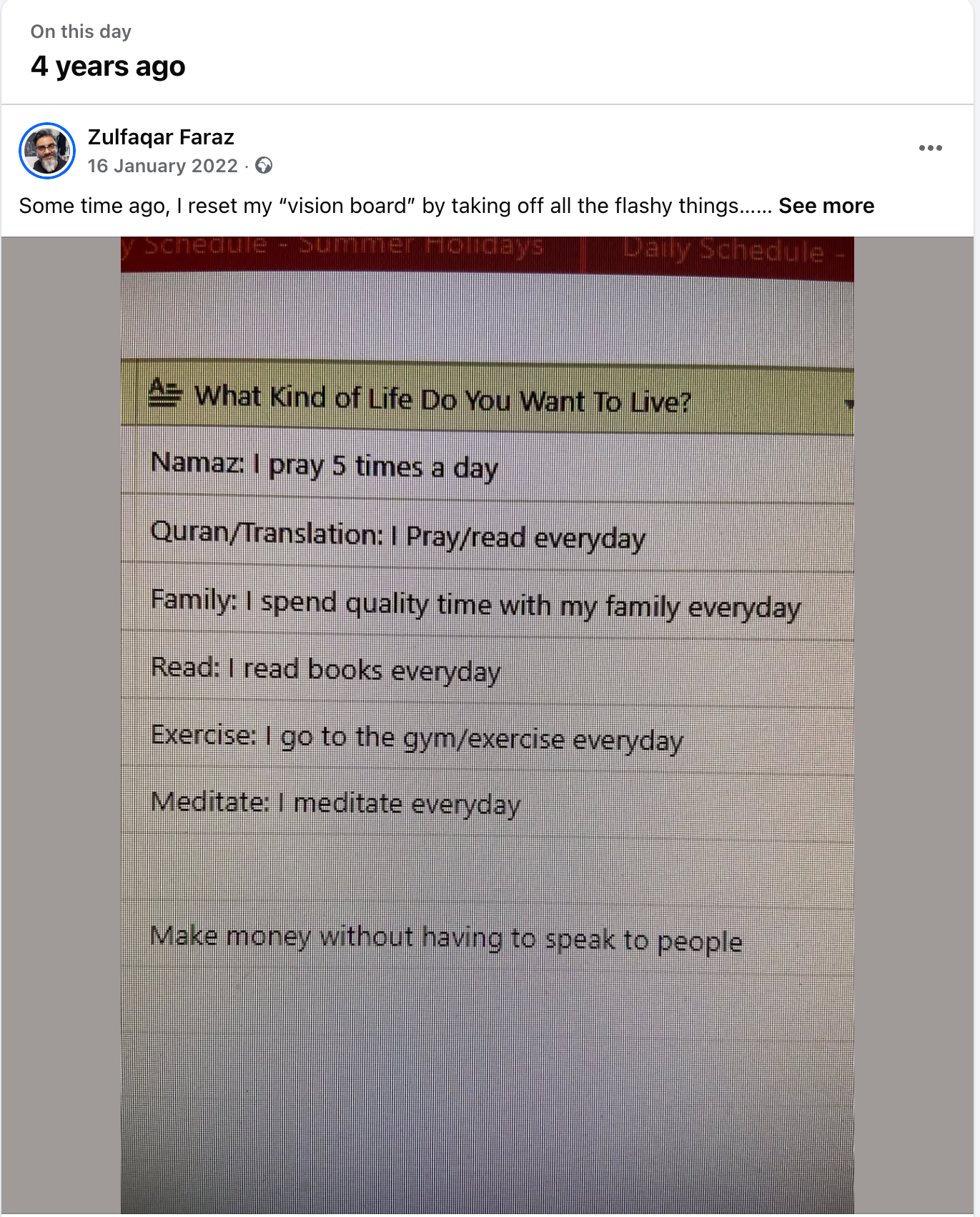
So put together your life plan; or the WHY behind your business plan. Here are a couple examples of mine in the past.
As you can see, mine started with all the things I wanted to do on a daily basis.
Prayer. Family. Reading. Gym. Mediation.
The last part, making money without having to speak with people, hat never worked haha…so I did the next best thing:
Overcame my fear of speaking, get very good at communicating, and started to enjoy speaking to people.
Why This Works
That was the short version. Here’s the slightly longer version, at the time I was seriously thinknig about going into YouTube and podcasting:
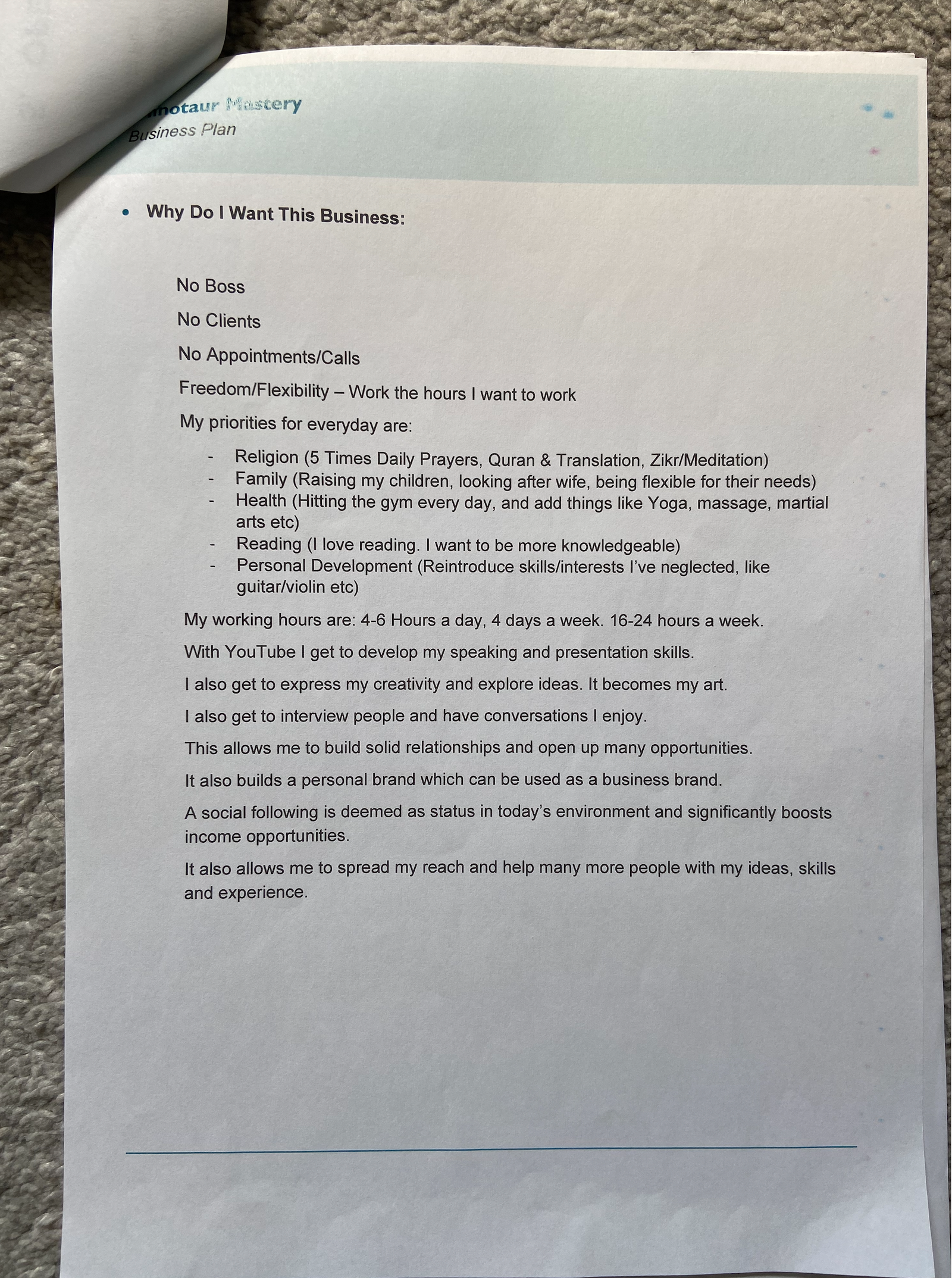
On this one you can see it mirrors the shorter version above. Prayer. Family. Health. Reading. Mediation. All on there. As things I want to do on a daily basis.
The other things I’m sure those of you in professional services can relate: No boss. No clients. No appointments/calls.
Then there’s the important part of how much I want to work, 4-6 hours a day, 4 days a week.
As well as the reasons for building a personal brand in terms of opportunities and impact.
When you do this, you do one main thing:
Instead of fitting things in around your career or your business; your work fits around your life.
You need to know what you want, before your start building towards it. The real issue you’ll face when you start building isn’t a lack of opportunity; it’s that you’ll come across so much opportunity you’ll start dippin’ into one project after another.
It will become another form of chaos where you make little to no progress. How you pick which opportunities to pursue will therefore depend on your life plan like the one above.
The tools and tech are now here. You can fashion the life you want to live, and do meaningful work to get there. It is NOT easy. You do have to work really hard for it. But with AI; it is more than just possible. It’s inevitable if you’re dedicated and commit.
This is why you should join the email list, where I will share tips, tricks, strategies and updates on how to maximise the AI-era.