
Why Public Speaking Tips Don’t Work For Professionals (Do This Instead)

There’s a book that tells you to do a superhero pose before speaking. Arms out, chest up, chin forward. Hold it for two minutes. Apparently it reduces cortisol and makes you feel powerful.
I tried it a couple of times. Felt like a complete idiot.
Maybe that was the point: feel like an idiot about the pose, so you don’t feel like one speaking. Either way, it didn’t fix anything; Tony Robbins got it wrong.
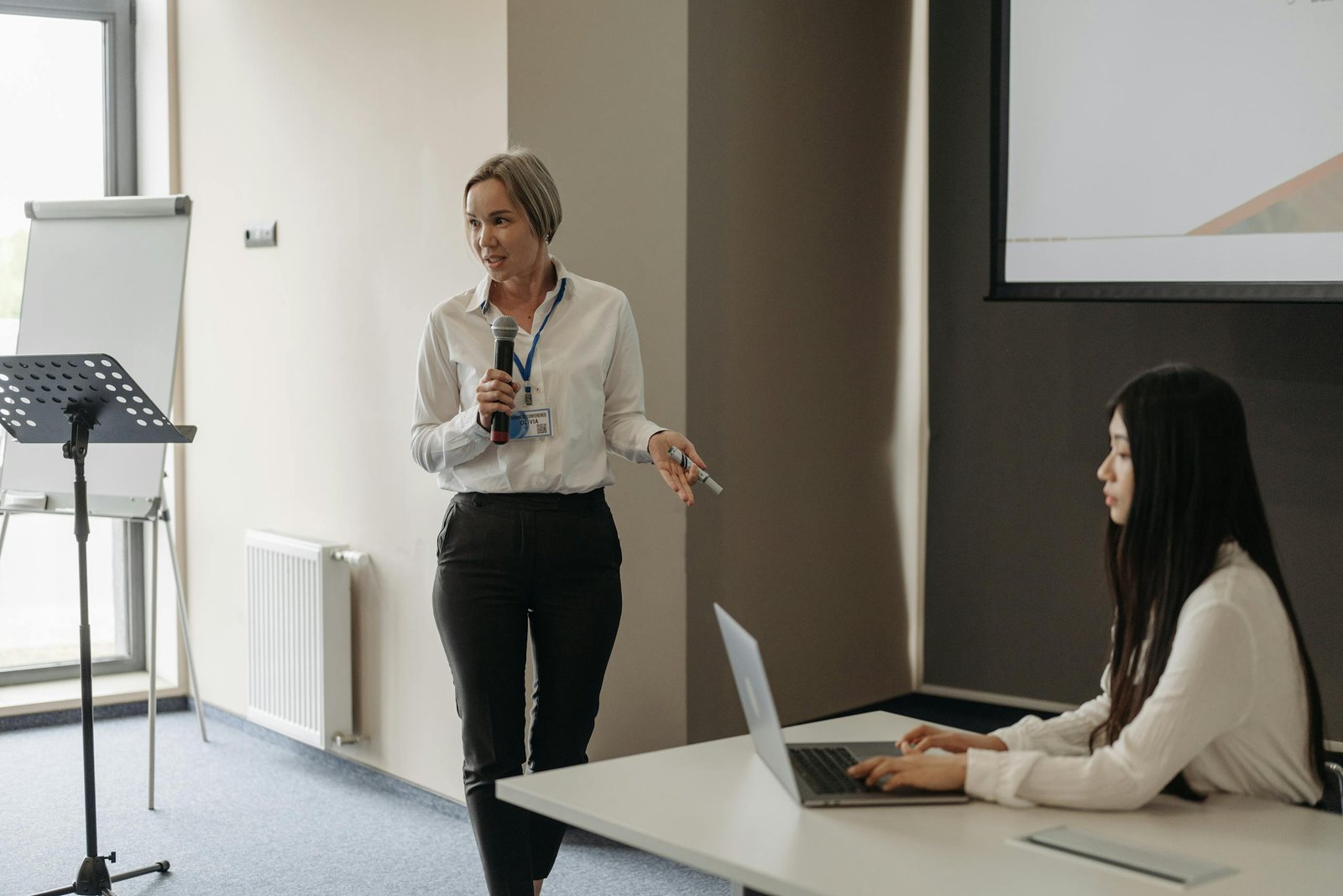
This is the experience of most professionals who try to address their speaking fear. They find a tip. They try it. It helps slightly, or not at all, or only in specific situations. And then the fear comes back the next time, in a slightly different form, just as strong as before.
The reason isn’t that the tips are wrong. It’s that tips are aimed at the symptom. The actual problem is somewhere else.
Why Tips Fail
Standard advice for public speaking fear comes in a predictable package. Prepare more. Practice in front of a mirror. Breathe deeply. Visualise success. Make eye contact. Vary your tone. I’ve given a bit of this advice in a previous post.
All of it is technically correct. None of it addresses the actual problem.
The fear isn’t a skills problem. You yourself know you’re gifted and have lots of skills. But you still have an issue with speaking.
It’s a judgement problem they say, but even that’s inadequate. More precisely, it’s a threat-response problem. Your brain has categorised speaking in front of others as a social threat: a situation where your competence, credibility, and worth might be exposed as insufficient.
Until that underlying threat response is addressed, techniques applied in the minutes before you speak won’t reach far enough. They’re managing the symptoms of something they’re not touching.
I’ve read the scripts. Came across rigid as anything. I’ve tried the visualisations, they didn’t really move the needle.
I’ve done Toastmasters, personally didn’t like it. 30 minute drive to Leeds City Centre, expensive car park, 2 hours sitting in the meeting and fluffin’ the 30 seconds I had to speak, only to drive back for another 30 minutes. 3 hours for 30 seconds. Not for me.
I’ve tried every version of the standard approach. What actually worked was none of it.
What Actually Works
The only thing that genuinely moves the needle is exposure. Repeated, deliberate, accumulating exposure.
Not perfect exposure. Not exposure after you’ve prepared extensively. Just exposure. Imperfect, awkward, uncomfortable exposure that your nervous system has to process and adapt to.
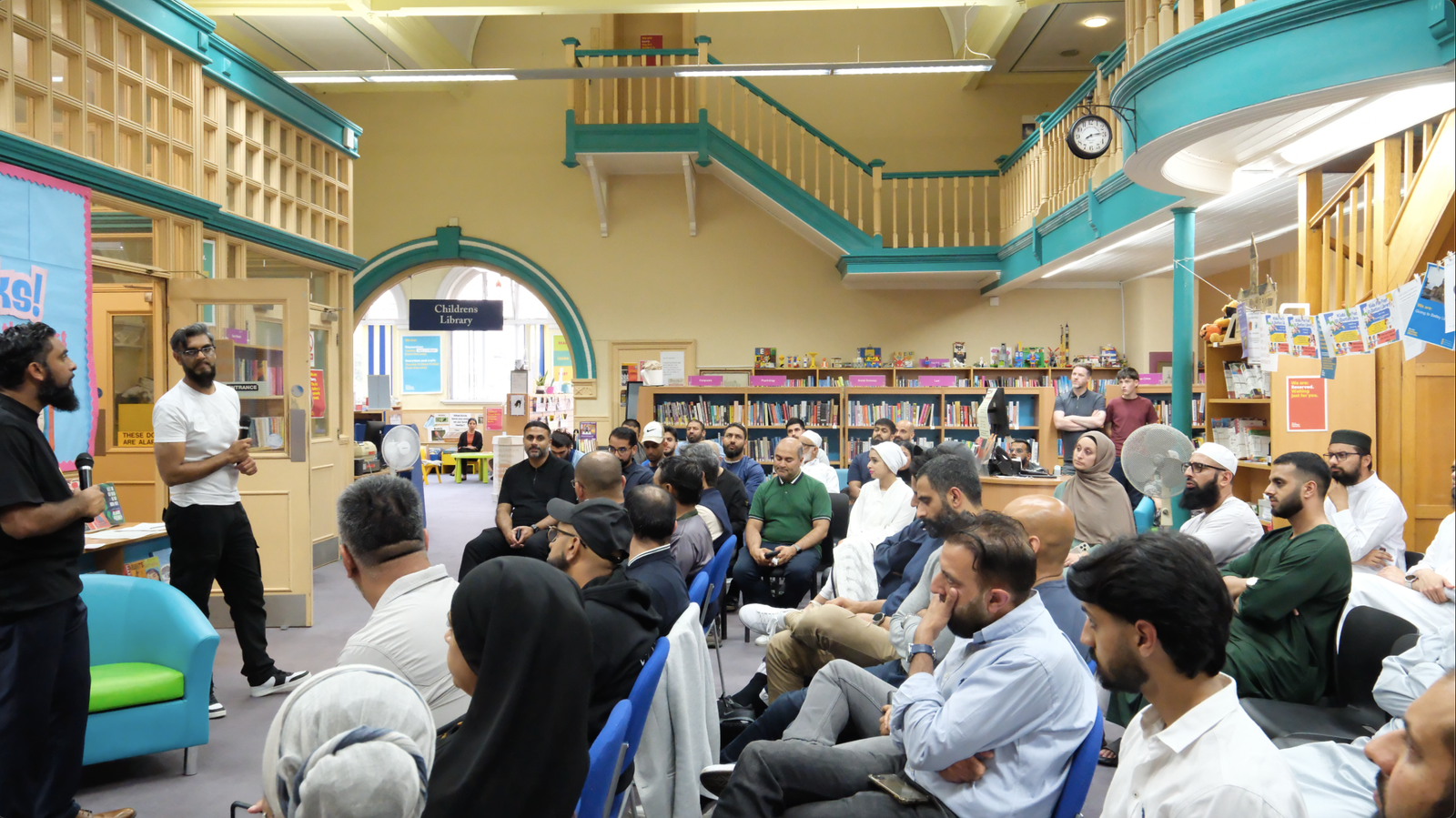
Before I got anywhere near a stage, I made videos. The first few I would sit in front of the camera for thirty minutes in a full panic attack.
Just me, the camera, no audience. Still couldn’t speak. Until I could. The first mental hurdle was clicking record. Once I did that, the next was speaking whilst the recording occurred. Mentally I just said, nobody is going to see this, if it’s horrible I’ll just delete.
That helped and I did it. It was bad. I didn’t delete it haha; it’s now a great piece of evidence for development.
The first few videos were bad. I published them anyway. Not because they provided any value, but because the point wasn’t the content.
The point was the action. Doing it once makes the second time marginally easier. The second time makes the third slightly easier. You’re not building confidence. You’re accumulating evidence that you can survive it.
The Only Process is Your Personal Process
Stop thinking about other people and their reactions. Stop worrying about views, and branding and metrics and going viral. The only thing you should think about is the personal development. See this as a self-improvement journey and that’s it.
This is the only process that works. There is no shortcut. No tip gets you around it.
Here’s the thing most people miss though: it’s not about eliminating the fear. It’s about deciding it doesn’t have veto power.
I still have a silent prayer I say before speaking now: “Ya Allah, let your spirit flow through me and help me deliver value so others are positively impacted.” And alongside that: “So what if I mess up…life goes on.”
Despite over a thousand videos, the fear is still there when speaking in person, but I’ve decided to move anyway.
Connecting with real-life stories can provide some solid encouragement for you. Lots of people have been in your shoes and have come out the other side with flying colours.
Personal stories of those who’ve managed to turn their fear into a strength can offer practical steps and inspire you to tackle your own fears head-on.
It’s why I talk about my struggles often; and the best thing I did was document the journey…it’s all online still: check out the first ever YouTube I made (this wasn’t my first ever video online; I dropped some on Facebook before getting on YouTube).
The Psychological Block Underneath
Most of you reading this are capable, skilled, intelligent professionals. You already know what to do. The block isn’t knowledge. It isn’t technique.

It’s the conditioned belief, installed by years of staying quiet, of staying safe, of letting the fear have veto power: that speaking up is dangerous.
That belief doesn’t respond to tips. It responds to action that contradicts it. You’re coming face to face with an identity crisis. With who you are at your core. The child within who feels unsafe.
Think about it, we were all told to fear strangers when we were children. I still vividly remember in school, the old TV-VHS player rolled in. They showed a video of a girl walking, a van pulls up with a hand out of the window dangling sweets. The girl reaches for them only to be snatched up into the van.
They literally frighened us as children to fear strangers. The problem is, 8+ billion people on the planet, almost every one is a stranger to us.
You Have To Go To War
Which is why the Minotaur mission is to go to war with yourself and a degenerate society fightin’ to keep. you weak, stagnant and sedated.
The system was designed for you to be an obedient worker. All that BS about you need to express yourself, you need to share your feelings and opinions was a lie. You only do does things as long as it doesn’t cause a stir.
So you’re not just going to war with yourself, with a deeper conditioned part of yourself you probably doesn’t even know exists; You’re going to war with society; with this system.
No wonder it’s the biggest fear on the planet. You’re not born with that fear. None of us are. It’s been programmed into us.
It’s A Trainable Skill
The good news is, if it’s been programmed into you it can be programmed out of you.
Every video you make and upload publicly. All the talks you give, however imperfectly. Every time you stay on the camera rather than clicking away. Each one adds a small piece of evidence to a new story your brain is building about who you are and what you’re capable of.
This is why perfectionism is the enemy. Most of my early stress came from getting worried about every little thing. Now I don’t care. Just get it done.
Key realisation: completely silencing the mind before speaking sometimes works better for me than preparation. If you’re a smart professional, you already overthink. The best solution is sometimes to stop thinking altogether. Let what will be, be. Go in empty.
The point is, if weakness and the fear of speaking has been trained into you, it most definitely can be trained out of you. You just have to do the training.
Here’s the thing, it might NOT be speaking that is the training. We’re talking about self-esteem, self-worth issues. Try a different approach. I did 75-Hard, and a separate 100 days in a row at the gym lifting weights.
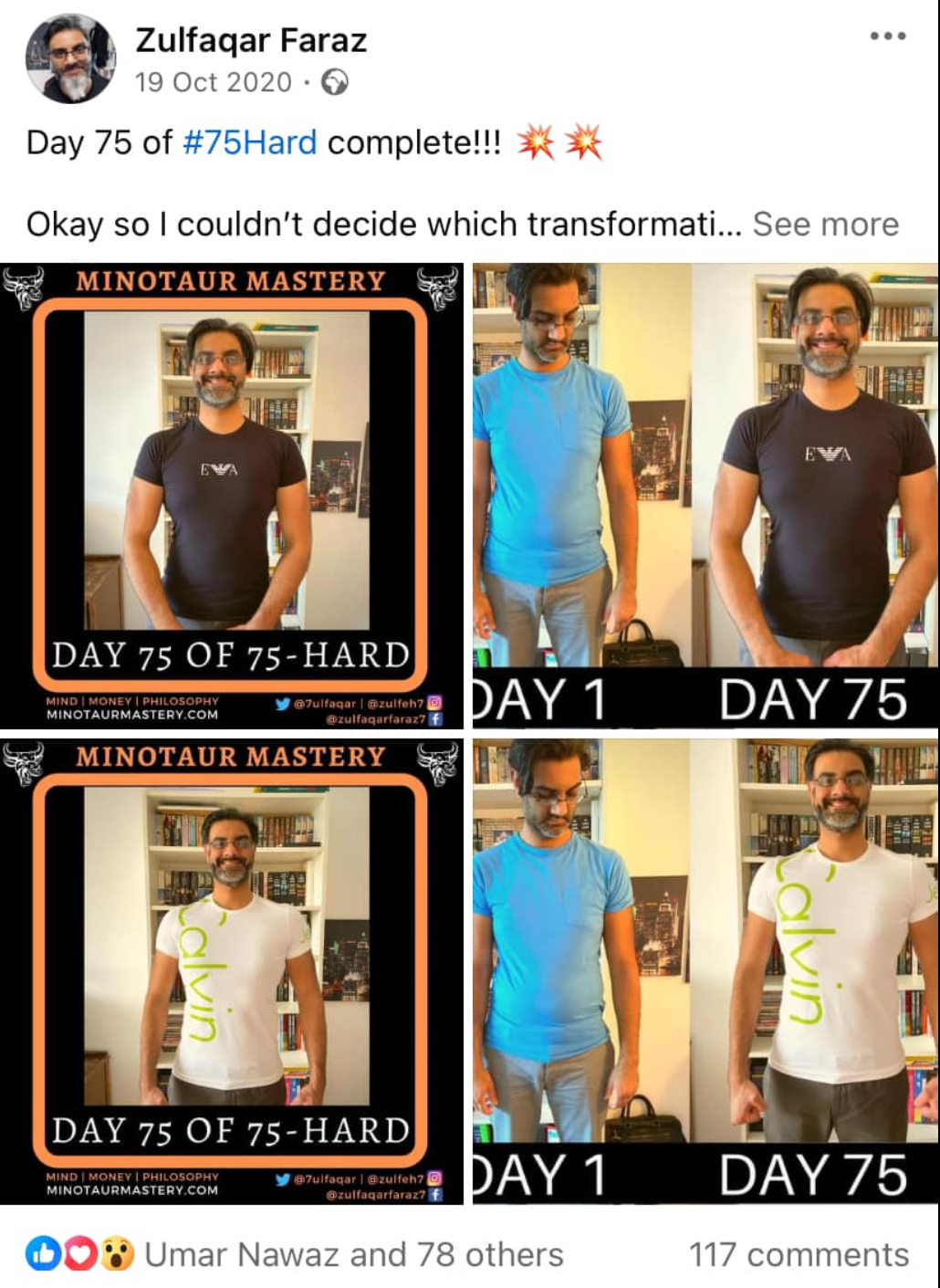
The internal transformation was electric. It impacts every area of your life; including speaking. Like I always say, self-esteem is the relationship you have with yourself. Confidence is the relationship you have with others. Communication is the bridge between the two.
Start with yourself.
The MVE Approach
The Minotaur Video Exemplar programme was specifically designed around this principle.
It doesn’t start with camera technique. It starts with the internal psychological work: understanding what’s actually driving the freeze, dismantling the conditioned beliefs, and building the evidence base one exposure at a time.
Then the external execution follows naturally. Communication skills, camera presence, content, all of it lands differently once the internal block is addressed first.
It’s not coaching in the traditional sense. It’s 1-2-1 structured exposure with accountability, critique, and a studio day where we document your transformation together.
If you need more information or want to see if it’s a fit, book a call.
The One Thing
If you take one thing from this article, make it this.
Don’t wait until you feel ready or until the fear goes away. Don’t wait until you’ve read one more book or taken one more course.
Switch on the camera and start talking. It doesn’t matter what you say or how you start. The only goal is to do it. Then upload it publicly. Then do the next one.
The fear doesn’t disappear before you act. It reduces because you act.
Drop the first rubbish one. That’s where it starts. See it as a personal development journey. Get better. Go to war with yourself. Go to war with this degenerate society fighthing to keep you weak.
Get ready to fight with the prospect of AI replacing you. Once you build this you will be working on communication and visibility, 2 of the important pillars to protect against the coming AI age.
Join the email list to be the first to receive updates on the other aspects.
2026 Update Note:
This was written before I started speaking regularly on stage, but since revised.
What I’ve learned since, whether speaking in front of hundreds of people at BEC events, or on camera, is that this principle holds at every level.
The stage version of the same fear responds to the same solution: you just do it, and the doing changes you.
If you’re ready for what actually works, go here next: 10 Ways Professionals Can Conquer Public Speaking (Before AI Makes You Irrelevant)






One Comment