
AI Is Replacing Quiet Professionals: Fear of Public Speaking Is Killing Your Career

85% of people fear public speaking according to Stanford. Public speaking anxiety affects a huge chunk of peeps across the globe.
The problem is, being a quiet professional worked in the old world; being an invisible professional in the AI era is career-suicide.

I personally chose the wrong career because I couldn’t speak. When I was deciding between becoming a barrister or a solicitor, I chose solicitor solely because barristers have to stand up in court and speak. I didn’t want to speak. So I took the option that let me stay quiet.
That decision cost me years; but I still did relatively well in the corporate world despite personal misery. I’m not telling you this to be dramatic. I’m telling you because I know something about the cost of silence that most people either never discover or only discover after it’s already done its damage.
And right now, in 2026, that cost has gone up significantly thanks to AI and technical innovation.
The AI Era Has Changed What Silence Means
For most of the last century, you could build a successful professional career while staying relatively quiet. Keep your head down. Do good work. Let the results speak for themselves.
That model is dead.
AI is collapsing the economic case for professionals who can only execute. It can research, draft, analyse, review, summarise and organise faster than any human team.
The professionals who built their entire career on technical competence, without building any visible presence, authority or communication skill on top of it, are the most exposed people in the workforce right now.
What AI cannot replicate is a human being who can walk into a room, command attention, communicate their thinking clearly and build trust through the way they show up.
That’s not a soft skill. In the AI era, it’s the hard skill. The one that determines who gets the opportunities and who gets quietly replaced.
Most People Have Already Known
Here’s what the data actually says:
- Poor public speaking skills can reduce your earning potential by 10%.
- Around 30% of professionals have avoided applying for jobs or promotions specifically because of fear of speaking.
- 85% of professionals believe that strong speaking skills are a key factor in career advancement.
So you’ve already known deep down you need to do something about your fear of speaking skills. And that was even BEFORE AI entered the picture. Before visibility became the primary differentiator between professionals doing the same work.
The quiet professional used to be overlooked. Now they’re being replaced. Staying quiet before just meant you got the work done, normally better than others; but the promotions went to the less competent loud mouth. Now if you don’t speak up, the “promotions” are going to machines.
You’re likely already feeling the psychological impact. Moments like this can increase the loudness of your inner critic; dealing with that will always be the first step which is why reflection is an important Minotaur Mastery principle.
An Old Problem That Just Got Urgent
I’ve been talking about speaking anxiety since 2018. Back then I wrote about it as a personal development issue. A confidence thing. Something you should probably work on at some point.
In 2026, it’s a survival issue.
The professionals who thrive in the next decade will not be the ones who know the most. They’ll be the ones who can communicate what they know in a way that builds trust, creates demand, and makes them impossible to ignore.
My recent content has been consistent in mentioning 5 core skills you now need at a minimum:
- Expertise in your field/craft
- Proficiency in AI
- Problem-solving
- Communication
- Visibility
Visibility is not vanity. It’s leverage. And speaking is the most direct route to visibility that exists; as well as enhancing your communication skills. Two very important birds with one stone.
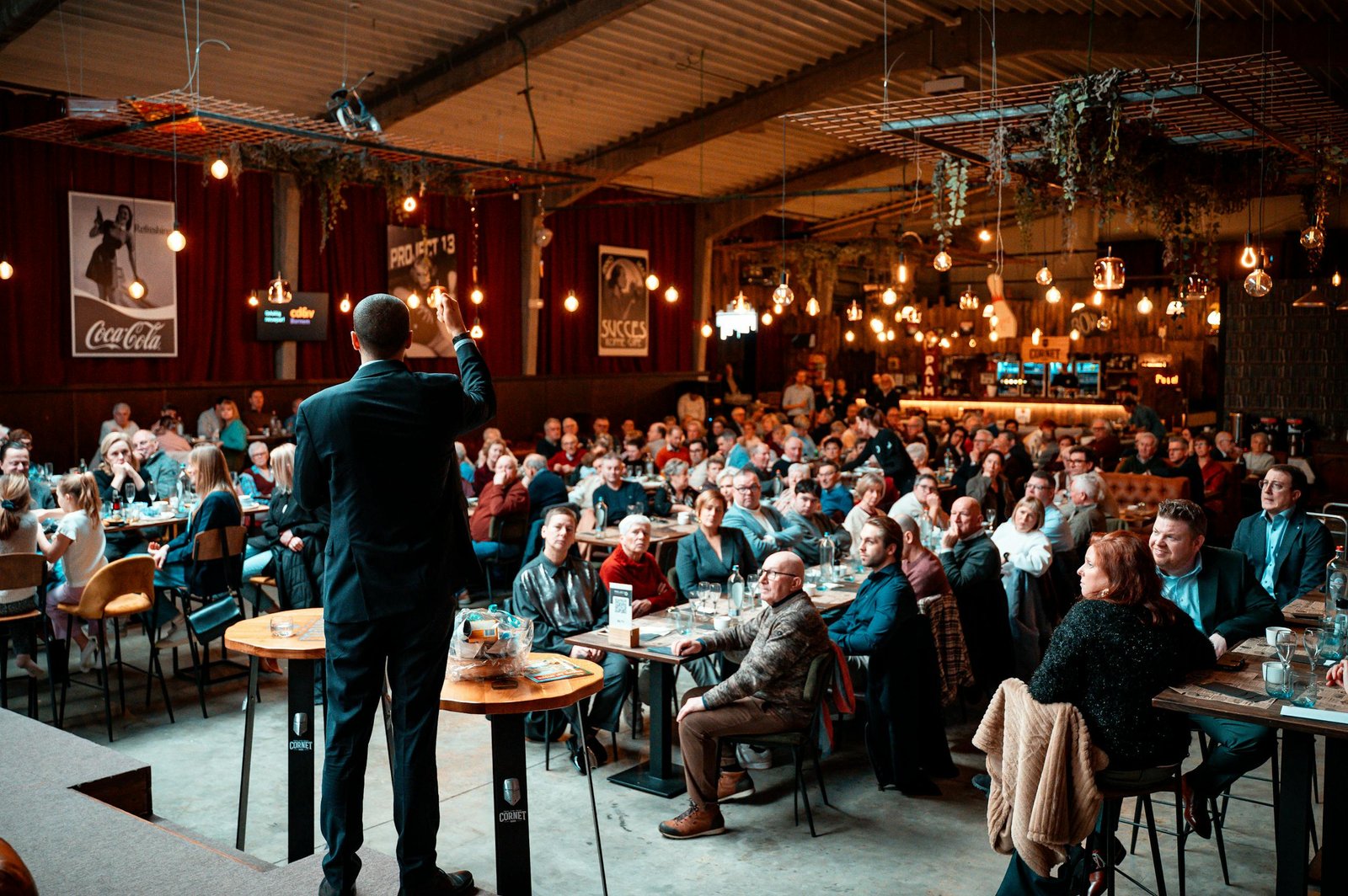
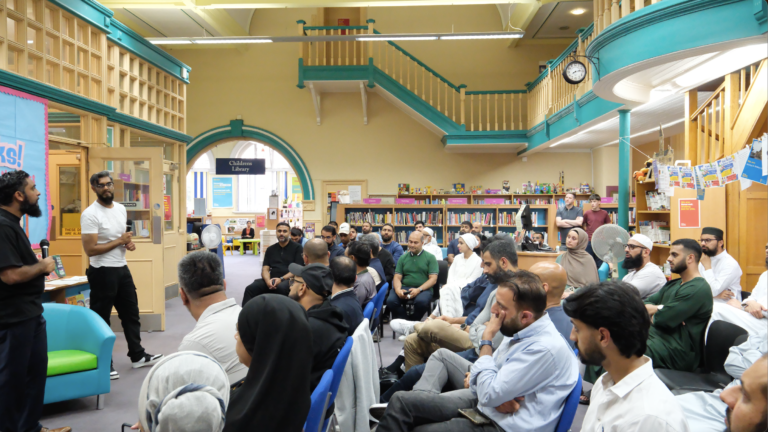
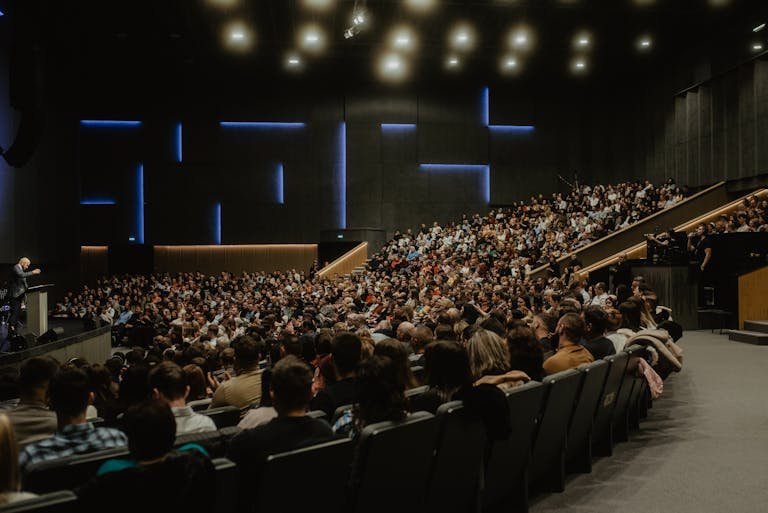
I’ve experienced both sides of this. I spent the first thirty years of my life functionally mute in any situation that required me to perform; calls, meetings, rooms full of strangers. Now I can’t stop talking. I run events in front of hundreds of people, & make videos every day nearly every day.
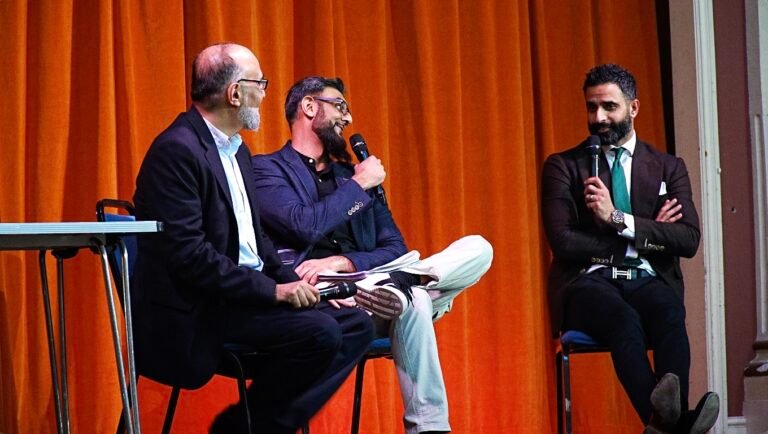
In the past year, as of 2026, I’ve started speaking in front of crowds with the Batley Entrepreneurship Club I created.
The difference between those two versions of me is not intelligence or expertise. (In fact, I’d argue I was smarter when silent haha). It’s the decision to face the Minotaur rather than keep running from it.
What’s Actually at Stake
Let me make this concrete.
If you’re a professional in your 30s or 40s who has built a career on expertise alone: law, finance, consulting, engineering, medicine, whatever your field…and you cannot currently communicate that expertise visibly, credibly and consistently, you are running out of time to change that.
Not because AI will replace you tomorrow. But because the window to build a visible presence before you need one is closing. The professionals who move now do so from a position of strength.
The ones who wait do it from a position of desperation; usually after a redundancy, a restructure, or a realisation that the company they gave fifteen years to replaced them with a tool that costs £20 a month.
It is going to take you time to build your reputation and relationships; which is the point of communication and visibility.
Communication is a superpower. Whether you’re talking to clients, presenting to leadership, or building an audience online, speaking confidently is the thing that separates the professional who gets chosen from the one who gets overlooked.
In the post-career AI age, it’s the number one thing that will lead to trust, authority, credibility and a strong reputation.
The question isn’t whether you should work on this.
The question is how long you’re going to wait.
Summary – 2026 Update
This article was originally drafted in early 2025 before I spoke on stage in-person; and so has now been revised to be more relevant and up to date.
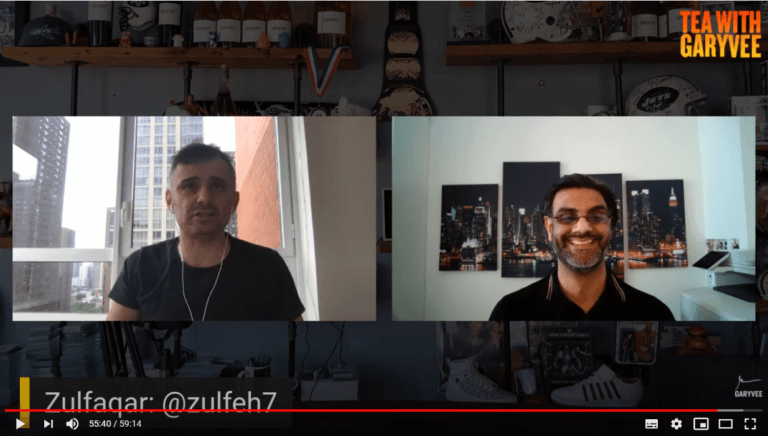
Prior to speaking on stage, I created hundreds of videos online over the years. They are different skill-sets, but speaking on camera and posting on social media made it easier to speak on stage.
After speaking with many people about this issue, especially smart professionals, I’ve realised far too many get hooked on tips, tricks and strategies.
The truth is, you don’t need tips or strategies. These are there to make you feel better mentally.
Dealing with the fear of speaking is more a psychological game. It’s the internal Minotaur you need to battle in the maze of your mind. External strategies don’t help with that.
Most of you are capable, skilled and intelligent professionals. You already KNOW what to do. It’s just you freeze when it comes to doing it.
Just Do It
The only thing that helps with that is pushing yourself through the fire. Switch on your camera and start talking. It matters NOT what the content is, how you start, what you say. You only have one goal, switch on the camera and talk. The next stage is to then upload publicly.
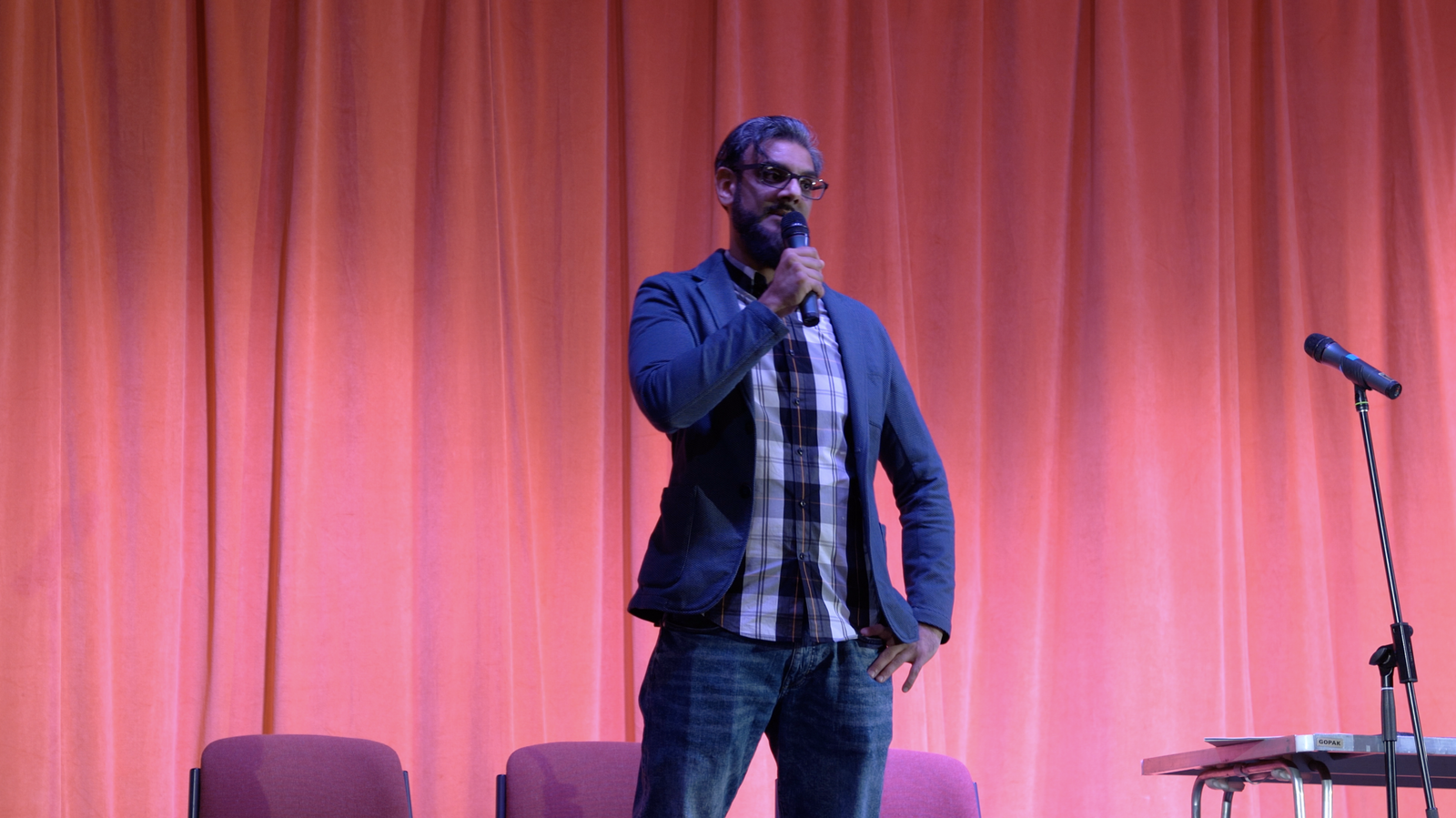
And when it comes to speaking on stage, same thing applies. My first event, I bottled it. I started talking, mumbled through a welcome and thank you for being here. Then I just passed it over to the guest speaker, without even introducing them properly.
The second time I got on stage, I gave a mini-talk by myself first. But I was sitting down throughout. The feedback I got was to stand up next time. And so I did.
You goal is to just improve over time, not get it right. So just do it!
However, if you do need personal one on one support; get in touch. The Minotaur Video Exemplar programme has been designed specifically for this.
Speaking well is critical for the AI-age we are now in. You can’t afford to stay silent and invisible any more. The programme deals with the internal psychological struggle, as well as the external execution. Reach out to me via social media channels, or book a call using the link.
If this resonates, read this next: You’re Good at Your Job. So Why Do You Freeze When You Have to Speak?


2 Comments