Is Work-Life Balance A Myth? Why It Fails in the AI Era

There is no such thing as work-life balance. This concept has been driven into you because this degenerate society forced you to accept misery, depression and a meaningless career as necessities.
To deal with the sedated stagnation, they told you that you need to find work-life balance; which is nonsense.
Work-life balance is a myth because work and life are not separate systems, they are integrated. In the AI era, this becomes more obvious as traditional career structures break down.

I know that’s not what you were hoping to read. But I’ve spent the better part of two decades testing the idea from every angle: career lawyer, business owner, founder, community builder…and the conclusion is always the same.
The balance doesn’t exist. The question itself is the problem. Let me explain why, and more importantly, what to replace it with; because if you don’t get this right in the post-career AI era, you’re going to find it difficult.
The Myth the Corporate World Sold You
The idea of work-life balance assumes there are two separate things:
- Work on one side
- Life on the other
And that the goal is to distribute your time fairly between them:
- Give eight hours to work (on paper, in reality it’s more 10-15)
- Give the rest to living.
- Keep them separate.
- Don’t let one contaminate the other.
It sounds sensible and logical. It’s completely unworkable. Because how you do one thing is how you do everything, as the maxim goes.
If you spend eight to ten hours a day doing something, anything, that affects your energy, your mood, your disposition, your relationships, your self-perception…
…then there is no version of reality in which you drag yourself through a miserable Monday at a job you loathe and then switch to a fully present, engaged, energised human being the moment you walk out the door.
It doesn’t work like that. The misery follows you home. It sits at the dinner table with you. It lingers in your mind as you try to sedate yourself with football, movies, TV shows. It lies in bed with you. It makes you short with the people you love.
I initially wrote about this toxic daily routine 8 years ago, so you can see it’s not something I’ve just made up. You can read the article, along with the other earlier ones which demonstrate my documented journey in experimenting what I’m now talking about.
The Cycle of Sedation
I watched it happen to the people around me for years in law firms and offices. Payday would arrive. The office would briefly come alive. Friday club, drinks after work, became the weekly ritual.
Not because people were celebrating anything. Because they needed to numb the six days of misery that preceded and would follow it.
First Friday after payday everyone showed up. Second Friday, fewer people. By the fourth Friday, nobody had money left and the whole thing collapsed until the next cycle started again.

As a Muslim I didn’t drink; so the whole thing felt hollow anyway. But seeing the change in behaviours of others; seeing the difference in energy, and coping mechanisms was eye-opening. This is NOT the life I want to live; and there is no way I’m going to spend my career following this path.
However, drinking is one coping mechanism. It can be replaced by Netflix, doom-scrolling, smoking, unhealthy eating and a whole heap of other distractions. The mechanism is different but the function is identical: sedating the pain of spending your best hours doing something that drains rather than builds you.
I was there. I did it. And I know now that what I was calling a work-life balance problem was actually a different problem entirely.
The Real Problem Nobody Names
In 2022 when I first made the video that this article is based on, I framed it as a lifestyle and productivity issue. That framing was right as far as it went.
In 2026, I’d go further.
The work-life balance myth is not just a scheduling problem. It’s an identity problem. And for most professionals right now, it’s becoming a crisis.
For most of the twentieth century, the deal was this: you give your working hours to an institution, the institution gives you security, structure, and an identity.
Lawyer. Engineer. Teacher. Accountant. Manager. Director. Your job title was your answer to the question “who are you?” You didn’t have to work that out yourself, the institution handed it to you along with your employment contract.
That deal is breaking down. It’s been breaking down for well over a decade now. AI is going to exacerbate that break down further.
The AI Disruption
AI is collapsing the economic case for large professional workforces. The billable hour model; where law firms, accountancies, consultancies charged clients for human time; is structurally threatened when AI can do in four hours what used to take forty.
Government funding cuts have already gutted entire legal sectors. Corporate restructuring is accelerating everywhere. The professionals who assumed their expertise alone would protect them are discovering, often painfully, that expertise without visibility leads to replacement.
Replacement by the less qualified loud mouth was one thing. Replacement to a non-human is something else entirely.
And when the job disappears, or the structure of the job changes so fundamentally it stops resembling what you trained for, the identity crisis hits with a force that no amount of Friday club could have prepared you for.
My biggest issue since leaving law wasn’t developing new skills, experiences or intellect. It was my failure in dealing with the loss of identity I got from being a lawyer.
Now that I’m not a lawyer, what am I?! Now that I’m not doing legal work, the work i’m doing doesn’t FEEL like work, so it’s not real work. If it’s not real work, I can’t charge for it even though I enjoy it and I’m good at it.
This is the new version of the work-life balance problem. It’s not just “I work too many hours.” It’s “I built my entire sense of self around a career structure that no longer works the way I assumed it would, and now I don’t know who I am outside of it.”
Why Starting a Business Doesn’t Automatically Solve It
When I left law, I thought entrepreneurship was the answer; because that’s what everyone said the alternative was. Freedom. Flexibility. My own hours. My own decisions.
What I discovered is that running a business is harder than being employed, not easier. More responsibility, not less. The 9-to-5 cage gets replaced by an always-on everything.
You swap one type of misery for another; unless you build the business around the life you actually want rather than using the business as another way of avoiding the question of what you actually want.
Most people who leave corporate to start businesses make the same mistake I made: they just work the same way they always have, but without anyone telling them what to do.
And the complete loss of structure, no manager, no meetings, no KPIs, no one to report to, turns out to be terrifying if you’ve spent twenty years being directed from the outside.
The problem isn’t employment versus entrepreneurship. The problem is that neither model has forced you to answer the foundational question: what do I actually want my life to look like?
Work first, then fit life around it (what we’ve all been trained to do)…or define the life you want first and build work that fits inside it (what you should be doing).
What I Do Instead of Trying to Balance
I stopped thinking about work and life as separate things that need to be balanced against each other. I started thinking about them as different dimensions of the same thing.
Family. Religion. Health. Reading. Building. These are not things I do when work is finished. They are the non-negotiables I build everything else around. They come first.
Not because I’m irresponsible about work; but because I’ve learned from painful experience that when those things suffer, nothing else functions properly either. The work suffers too.
There was nothing more devastating than waking up at random moments in the night due to depression-anxiety about the day ahead. The damn-awful commute to and from work. The day spent doing tasks I legit hated. By the time you get home, you’re so drained of energy…you eat, and then sedate with TV.
These guys telling you to use the off-hours to start a side-hustle haven’t a clue; trying to fit in family, gym, whilst trying to mentally recover from the work drain makes it excruciatingly difficult to build anything.
Flexible Discipline
However, with AI, it is different now. And with the right system, direction and work-ethic, you can make that change.
The practical system is simple. I plan the week on Sunday. I work in blocks; two-hour deep work sessions, one-hour task sessions. Each block has a specific defined task. In the evening I check the next day’s plan so I don’t start the morning wondering what I’m supposed to be doing.
When life interrupts; and it always does; blocks move. They don’t disappear. The flexibility is in the scheduling. The discipline is in the commitment to showing up.
When I’m on point with one thing, I’m usually on point with everything. When one area collapses, everything else feels the drag. Because they’re not separate, they never were.
The goal isn’t balance.
The goal is integration.
It’s a life where the work you do is a genuine expression of who you are and what you’re building, not a compromise you make to fund the parts of your life that actually matter to you.
Why This Matters More Now Than When I First Said It
In 2022 this was a lifestyle philosophy.
In 2026 it’s a survival framework.
The professionals who are going to get through the next decade well are not the ones who get better at switching off from work when they go home.
They’re the ones who do the internal work first, who get clear on what they actually value, what they actually want, what kind of work actually energises them rather than drains them, and then build their visible professional presence around that clarity.
Step 1 of the Minotaur Mastery framework is always self-reflection. Think is the first part of TECA. Your whole life has been spent with other people telling you what to do, what career to pursue, what qualification to get, what profession to be in.
The conditioning and programming is so deep, most can’t even sit down to do this honest self-assessment. But it has to be done, no matter how hard it is
Once you know what you actually want, you can then make moves to work towards it. I can guarantee there are a lot of you on £60k-£180k+ salaries; but you’re working dog-awful hours, doing work you despise.
You’d trade that to make £5k-£10k a month if it meant you now worked 4 hours a day; and had the flexibility to move work around your life; not move life around your work.
The Integrated Work-Life
Or, you’d happily work more hours, if the work you did was more an expression of yourself and who you truly are; something you enjoyed doing, or don’t mind doing, which doesn’t feel like work because it’s effortlessly aligned with purpose and meaning for you.
That doesn’t mean it will be easy. It’s still hard. Very hard. Requires discipline, dedication, commitment and resilience. But you find peace in the daily work you’re doing; which is a reward in and of itself.
I hated legal work. I tried different businesses, went into different industries, and found I hated many things. The process of elimination, assessment, experimenting eventually led me to a path of work I enjoy.
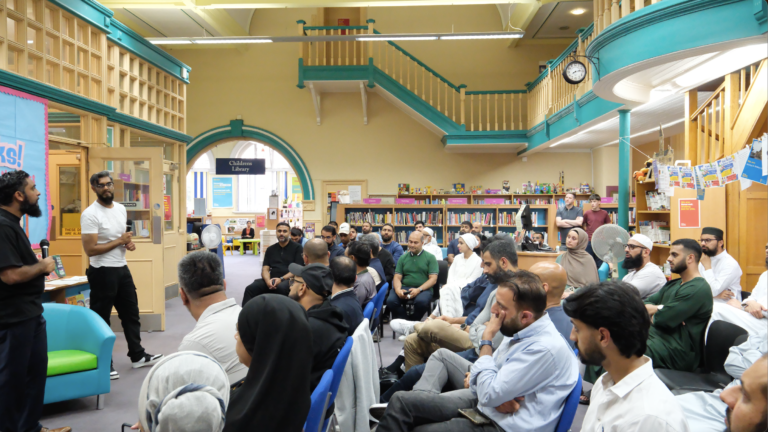
Building the Batley Entrepreneurship Club has been hard-work and stressful; but I love doing the daily tasks I do, along with the events I create.
Minotaur Mastery has turned into a documented asset of my journey. I love creating content. For someone who had a massive fear of speaking, I love making videos. I’m now starting to enjoy speaking on stages, even though the nerves still hit for that one.
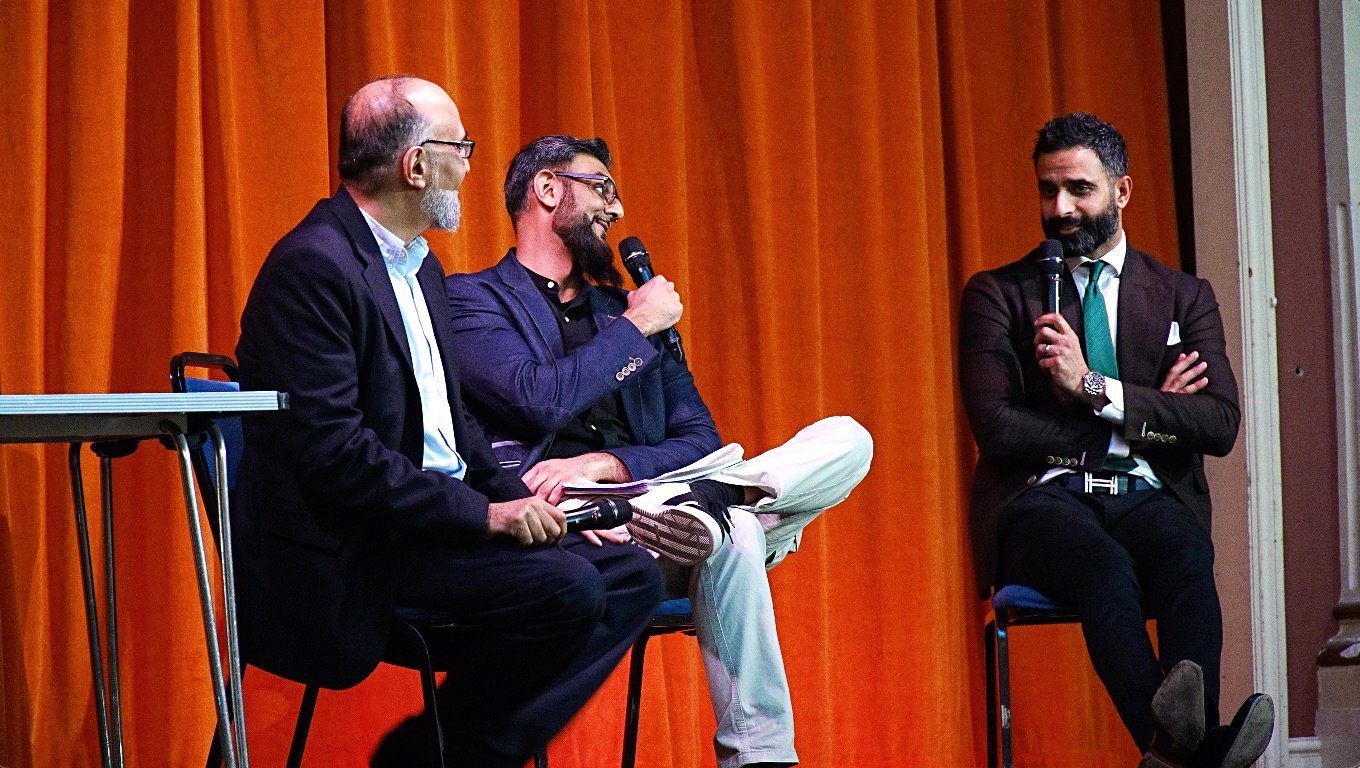
I now speak with people about their ideas, ventures, plans and intentions – conversations that energise me. As opposed to the dreaded client calls I used to get as a solicitor. I went from trying to avoid speaking anyone and everyone, to bringing large groups of people together.
Point being for you, it’s possible. Not only is it possible, it’s going to become necessary. The AI-age is massively going to disrupt the employment model. However, it presents a massive opportunity as well.
The AI Integrated Work Life
You as an individual, can literally function like a team of 5 or 10. The technology and tools now exist for this. You can literally choose to be a one-person operator, or a small team, or if you have the ambition, become a large company.
This applies equally to employed professionals, new founders and established entrepreneurs. But to tap into the opportunity you’ve got to understand exactly what you want first.
If you want time to spend with your family, to pray, to go to the gym, to live a more “balanced” lifestyle – then the idea of chasing 7-8 figure earnings is not a good one.
I’m not saying it’s not possible; it is esp. with the tech now available. But there will be a period of building, lasting 3 years, 5 years, maybe more – where most of your time will be spent building.
The flexibility then comes after that.
Or, you can decide that you want the more flexible lifestyle, work 4-6 hour days, make £3k-£10k a month, doing work that energises you; in which case there is no work-life balance; it’s just life. A well integrated life.
How do you make that happen? Everyone is trying to sell you one more course, or one more skill, or one more new hack or secret. Bullshit.
There is no such thing as just one more thing. Not unless, you’ve already stacked up on several skills already.
The Skill-Stack You Need
The future-proof skill-stack you need at a minimum is:
- Expertise in your chosen field/craft
- Proficiency in AI
- Problem-Solving
- Communication
- Visibility
Visibility matters now in a way it didn’t before. When employers and clients can find you through your content, your reputation, your body of published work…
…when opportunities come to you rather than requiring you to apply for them, the entire relationship between work and life changes.
You stop trading time for money in someone else’s structure. You start building something that compounds. That’s the real reason you build a brand, whether personal or business. Whether you’re an employee or a founder.
Self-Mastery In The AI Age
This is now what Minotaur Mastery is about. Not work-life balance tips. The deeper internal reckoning that has to happen before the external moves make any sense. Most professionals are going to suffer an identity crisis, along with a loss of meaning as AI changes the entire structure of the working world.
The ones that master themselves first and then execute externally using the new rules, tools and playbook will, however, thrive beyond what they thought possible.
The Minotaur in the maze of your mind isn’t your job. It’s the conditioning that told you to accept the job as the definition of who you are.
You can’t balance your way out of that. You have to face it.
If you have any thoughts or perspectives to share on this post, please do drop them in the comments below. I try to reply to everything; and of course can tailor future content towards your concerns and queries of the new post-career age.
If you are feeling this shift and know your current career structure won’t survive the next 5 years, it’s time to build your own engine.
Join the email list which will contain more breakdowns, and get the free Minotaur Relevance Playbook to see how you can stay ahead of the game. Sign-up below or head over to the home-page.
The 2022 Video
The original video from 2022 is below : same argument, different context. Worth watching to see how much the conversation has moved in three years.