You’re Good at Your Job. So Why Do You Freeze When You Have to Speak?

You know you’re smart, intelligent, capable & highly skilled. But when it comes to speaking in front of others, all of a sudden it’s: palms are sweaty, heart racing like crazy – somehow I think i’ve managed to mix up the words for Eminem’s 8-mile track, haha.
But yeah, that’s public speaking anxiety for you. It’s normal, even for people who seem super cool with a mic in hand.
Psychology tells us it’s a fear of being judged or messing up in front of peeps. And guess what? It’s pretty common. Not only that, they say it’s the biggest fear people have; which I find crazy albeit not surprising as I suffered from it for 3 decades.
Many feel jittery because of past experiences, like a school speech that didn’t go so well. I’m not sure what it was for me, I distinctly remember as a child being called in front of assembly to play the maracas (I think that’s what it was called – the shaker thing you hold in your hand).
I remember being so shy and embarrassed even though I was one of many in the line. My eyes were down, head rolling side to side, and for some reason i used to do this silly thing where my tongue was rolling around in my lower mouth area, underneath my bottom lip lol.
Recognise The Triggers
Anyhow, these memories can trigger symptoms like shaking hands or a mind that goes blank.
Recognising these triggers is a good first step. It’s kinda like when you know why you’re scared of roller coasters, it helps, right? Okay, that was a rubbish example. Espesh because it doesn’t help; well, maybe a little.
Hearing from others genuinely is really helpful though. Lots of people who stand on stage and make videos online today had to tackle this fear head-on.
They weren’t all naturally gifted speakers; they learned, and so can you. Understanding this helps in realising that you’re not alone, and it’s definitely possible to move past this fear.
I certainly, did, and my entire journey is documented online. You can even check out this “glow up” I did a few years ago; the first part will give you a glimpse of how I used to freeze even when it was just me by myself: https://www.youtube.com/shorts/pxHeFB2ckSg
It’s Not Fear of Judgment. It’s Fear of Rejection
Most people describe public speaking anxiety as a fear of being judged. I’ve never bought that framing.
Think about it. Being given a compliment is a judgment. You don’t fear that. What you actually fear is negative evaluation: criticism, rejection, humiliation. Being seen as incompetent, unprepared, or not good enough.
That distinction matters because it changes how you address it. Judgment is neutral. Rejection is a threat. And your nervous system doesn’t distinguish between a social threat and a physical one.
It responds to both with the same fight-or-flight response, hence sweaty palms, racing heart, mind going blank. The higher the stakes, the louder the fear gets.
Here’s the thing that most speaking advice misses: the fear gets worse as you get better at your job, not easier. Earlier in your career, nobody expects much, so there’s less pressure, even though there still is pressure.
Speaking up and getting it wrong carries limited cost. Ten years in? Everything has changed. You’re expected to have answers. Your credibility is visible.
The people in the room have formed opinions of you over years, and a poor contribution doesn’t disappear quietly. And of course you’ve now well and truly built a fixed mindset.
The more you’ve excelled professionally, the more there is to protect. And the more there is to protect, the louder the fear gets before you open your mouth.
This basically goes hand in hand with overcoming self-doubt and becoming confident, which is a previous article you will find useful; as the freeze you experience almost definitely is linked to the Minotaur of self-doubt.
The Competent Professional Paradox
This is the specific version of speaking fear that nobody talks about.
It’s not just the beginner who’s never spoken before. It’s the senior professional who has fifteen years of genuine expertise, real insight, things worth saying, yet still freezes the moment they have to say it publicly.
I see it constantly. Professionals who can articulate their thinking brilliantly in a one-to-one conversation, in writing, behind closed doors.
The moment there’s an audience, a camera, a room, a Zoom call with twenty people, something switches off. The expertise is real. The freeze is real. Both are true simultaneously.
What’s driving it isn’t a lack of skill. It’s a deeply conditioned belief that being seen is dangerous. That speaking up invites scrutiny. That the gap between how competent you feel internally and how competent you appear externally might be exposed the moment you open your mouth.
Simply put, it’s caring too much what other people think. Which is ironic because almost all of them will say they don’t care what people think.
This is the internal Minotaur in the maze of your own mind; the external threat is just an excuse.

You’re not just spewing facts; you’re having a conversation with your audience. But now you’re making assumptions about what the audience is thinking about you; which leads to over-thinking, which leads to self-doubt, which leads to the fear of sayin’ something silly, which leads to not saying anything at all.
What My Own Freeze Looked Like
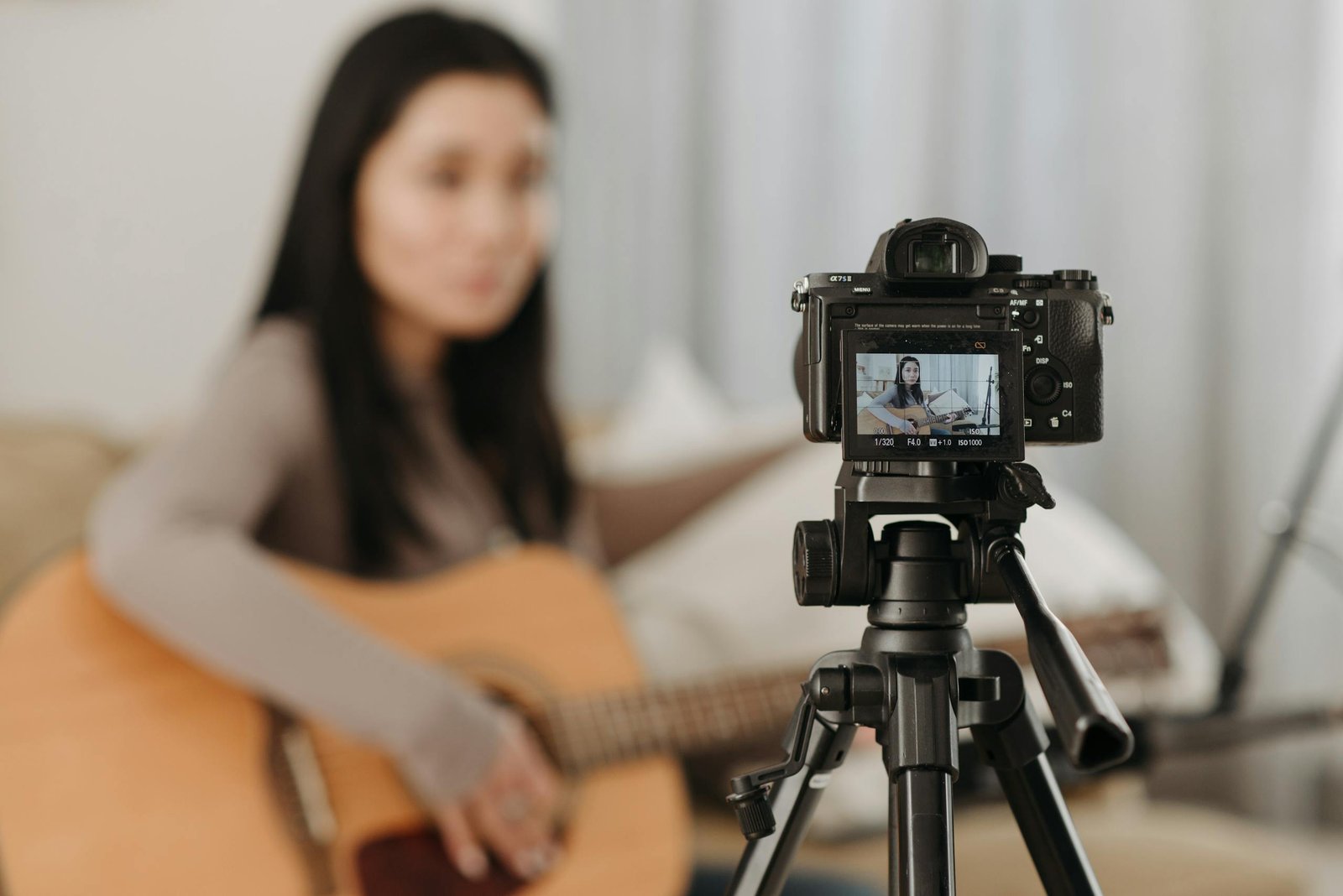
Those first few videos I made, I would sit in front of the camera for thirty minutes having a mini panic attack. Just me and the camera in a room. No audience. No judgment. And still I couldn’t speak.
I’ve gone into calls and podcasts, come out the other end, and only then noticed my shirt was damp with sweat. It wasn’t obvious during. The body processes it quietly.
After a thousand videos published, I have a particular insight into this that most speaking coaches don’t, because they were never genuinely crippled by it the way I was. My shyness and social anxiety weren’t mild discomfort. They were genuinely life-limiting.
I started overcoming it by writing first. The 2018 articles in the library of this website were the first step. Writing felt safer than speaking, nobody could see me and I convinced myself I was a fantastic writer so I didn’t need to speak.
I was a quiet guy by nature. Talking requires a helluva lot of effort. Then I moved to video. My YouTube channel initially had one purpose: develop the skill of speaking in public. That was it. Not views, not an audience. Just exposure therapy.
The Neuroscience of the Freeze
Your brain has a structure called the amygdala, it’s the threat-detection system. When it perceives danger, it floods your body with cortisol and adrenaline. Heart rate up. Breathing shallow. Thoughts scattered.
In a genuine physical threat situation, this is useful. It sharpens you.
In a speaking situation, it fires in exactly the wrong direction. The racing thoughts make you less coherent. The physical symptoms make you more visible. The self-consciousness makes the loop worse.
Here’s what changes this: evidence. Not tips. Evidence.
Every time you speak and survive it, however imperfectly, your brain updates its model of what you’re capable of. The neural pathway strengthens. The amygdala’s threat response weakens slightly. The next time, the resistance is marginally lower.
Confidence isn’t something you feel before you act. It’s something you build by acting before you feel it. The sequence is non-negotiable. Action first. Confidence follows. Because actions lead to the neurons in your brain firing and wiring together – as I heard Dr Joe Dispenza say so often.
What This Means Practically
The freeze you experience isn’t a character flaw. It isn’t weakness. It isn’t evidence that speaking isn’t for you.
It’s the correct neurological response to a situation your brain has coded as high-stakes. And the only way to recode it is through repeated exposure. Not thinking about speaking, not reading about speaking, not strategising about speaking. Actually speaking.
The question is whether you do that slowly, deliberately, with structure and accountability, or whether you keep avoiding it until the AI era forces the issue in a way that’s much harder to recover from.
The choice is yours. But it’s not a choice you can defer indefinitely.
The fear of speaking is one of the greatest minotaurs you will face, depending on how bad the fear is. It was one of mine. I ran from this Minotaur at every opportunity for thirty years. Until I faced it. And it was the best thing I ever did, bar none…it changed the trajectory of my life in ways I couldn’t have predicted.
It’s why I developed the Minotaur Video Exemplar programme. I know how bad the fear is and I know how brilliant overcoming it is. I’ve been crippled by the freeze, now I barely freeze; and have lots of fun.
Professionals conditioned by the system need a specific kind of support, which is how this programme is designed.
If you need that kind of one-on-one support consider applying to see if it’s a good fit for you.
2026 Update Note: At the time of publishing the update to this article, I’ve now spoken in front of hundreds of people at Batley Entrepreneurship Club events, interviewed major founders on stage, as well as all of the videos I’ve made online. The freeze is real. So is the other side of it.
Before you try any techniques, read this first: Why Public Speaking Tips Don’t Work For Professionals